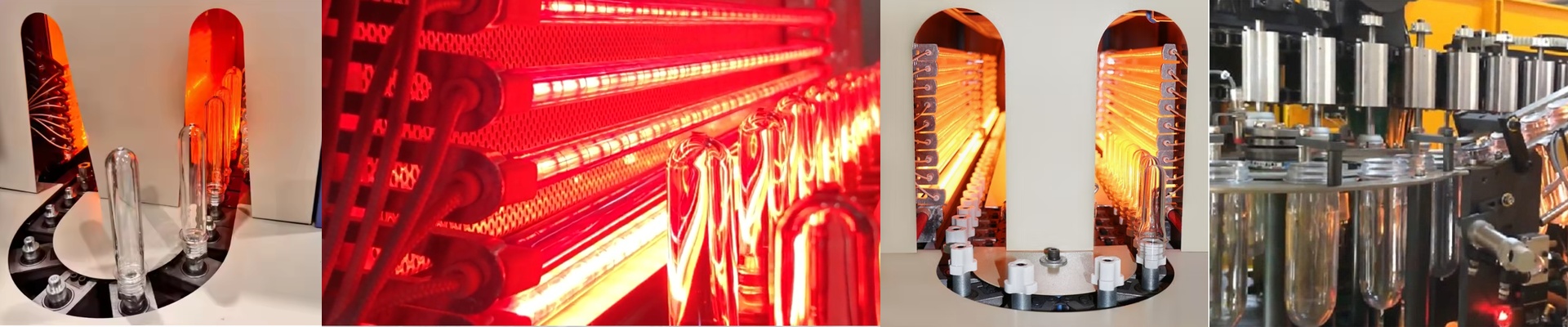
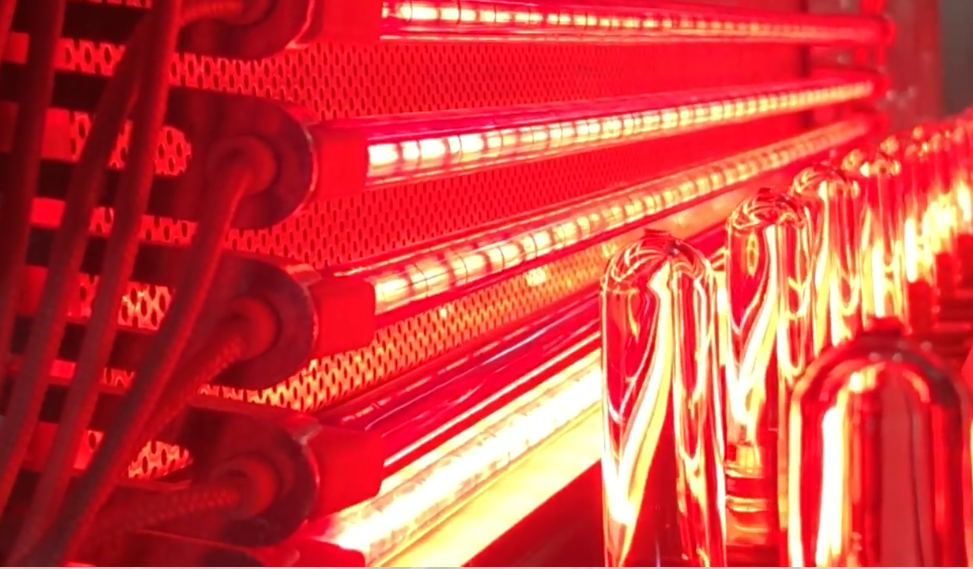
On the plant floor, an SMF stretch blow molder runs or stalls on one thing: stable preform heating. When the heating tunnel starts chasing temperature, you pay for it in uneven wall thickness, flash, and scrap. Throw in a mismatched lamp and the problems compound—slow warm-up, an inconsistent profile, and a short service life that keeps you on the line swapping parts. What matters under the hood We build the replacement lamp for SMF blow molders around short-wave infrared halogen emitters inside a quartz tube, matched to the machine’s power density and voltage window. The filament geometry and reflector layout keep the heat pattern tight across the preform shoulder and body, so you get repeatable crystallinity without scorching. Specs are engineered to OEM tolerances—length, base type, and terminal interface—so it drops straight into the heating tunnel. And it’s built for high thermal cycling, because in stretch blow molding the heater cycles hard, and the emitter has to live through it. Why it behaves differently in practice With this lamp, preform heating settles faster after changeover and stays steady through long runs. That means fewer rejects from off-spec bottles, more consistent fill performance, and fewer unplanned stops. Energy use drops, too, because the emitter delivers heat on-demand with low thermal mass. Longer service intervals also translate to less downtime for lamp changes. You keep the same SMF platform, but the heating section runs like it just came out of a rebuild. The details that keep it honest Installation is straightforward, but alignment is where you win or lose. Even a small reflector offset or a lamp that isn’t seated properly shifts the temperature distribution and can create hot spots. After replacement, run the heater profile and confirm preform index timing—this lamp performs best when tunnel airflow and lamp position are set to the original machine tolerances. And keep the lamp clean: oils from skin or contamination on the quartz will cut output and shorten life.