Getting Your KHS Heating Back on Track
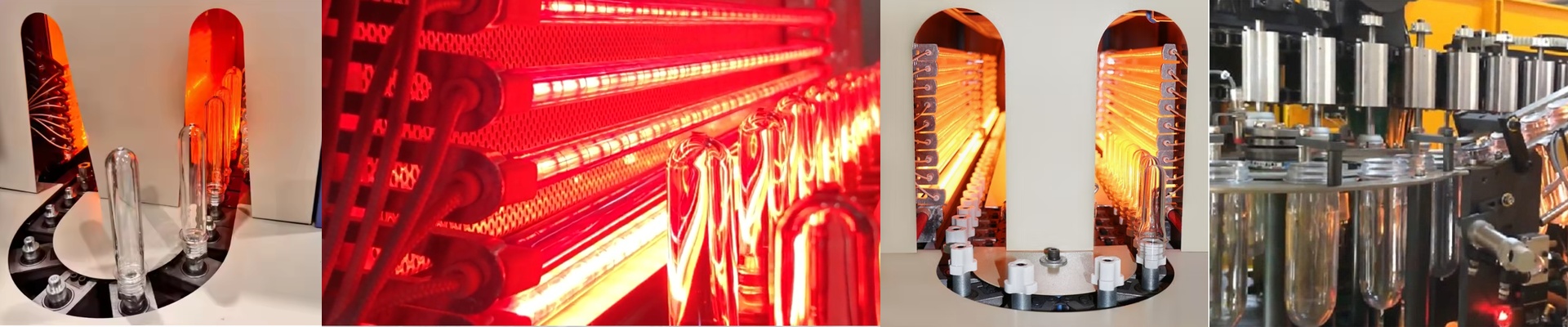
Ever pull a bottle off the line and notice the walls are uneven or the shape is just… off? It happens. Usually, it’s because the heating in your KHS blowing machine has gone wonky. Most people think they can just pop in a new bulb and call it a day. But it’s a bit more nuanced than that. If the spectral output or the wattage doesn’t play nice with your preform’s shape, you’re just fighting a losing battle. The math behind the heat Here’s the thing about power density. If you’ve got a high-wattage tube squeezed into a tiny space, you’re creating an intense heat zone. Whether you’re running 230V or 400V, it all comes down to how many watts you have per centimeter. That’s what actually pushes the PET to that magic glass transition temperature. We’re obsessive about the filament position. Why? Because if it shifts by even 2mm, you get a cold spot. And a cold spot means a bad bottle. Built to take the heat We use heavy-wall quartz glass because standard glass bows when things get hot. You don’t want your lamps warping under pressure. We also stick to R7s or SK15 connectors. If the fit is loose, you get arcing, and then your lamp burns out way faster than it should. It’s a frustrating cycle. To fix this, we’ve tweaked the coating on our high-end lines. It mimics the original KHS parts—sometimes it even beats them—so the infrared heat hits the preform evenly from end to end. A few things to watch out for Switching to high-output lamps is great because you can speed up your cycle times. You get a much harder “hit” of heat. But there’s a trade-off. More heat means your oven’s ventilation has to work harder. If your cooling fans are old or underpowered, you might actually overheat the internal wiring of the machine. My advice? When you swap the lamps, keep a close eye on the preform surface temperature for the first 50 cycles. Dial in the power settings slowly. It takes a few minutes, but it saves you a massive headache later.