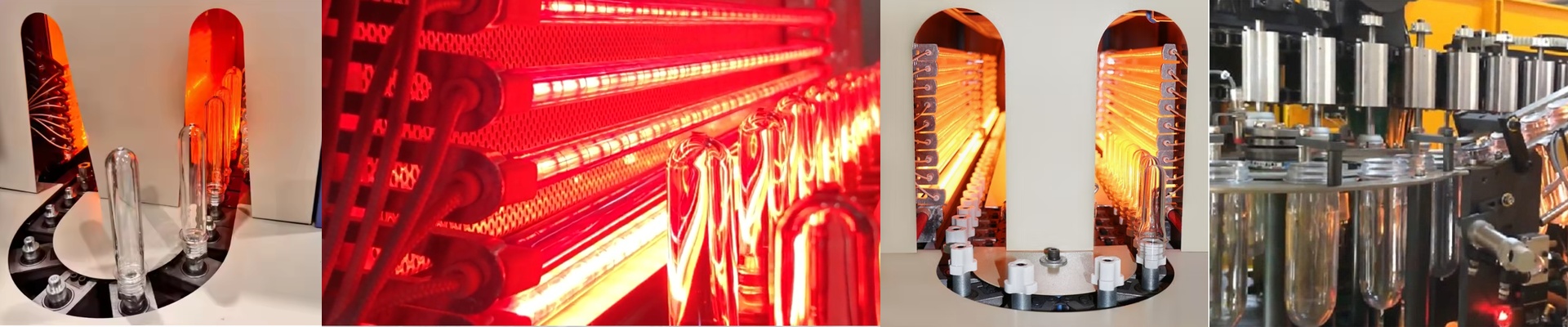
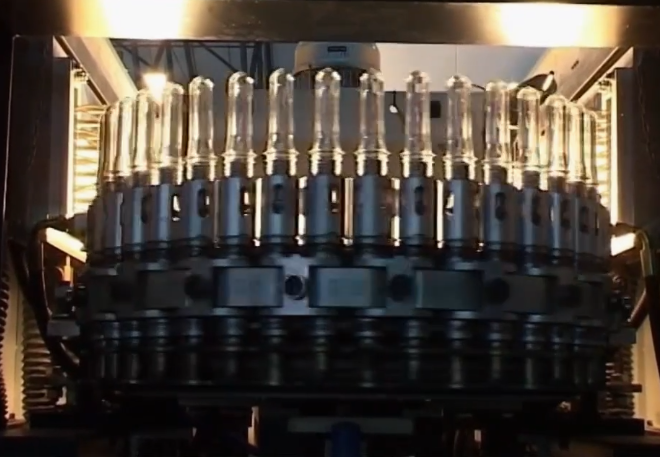
On the blow molding floor, uneven preform heating isn’t just a quality headache—it drags the line down and piles up scrap. Infrared emitters can deliver the heat input you need for consistent stretch blow molding, but only if they’re truly matched to the machine and the material. Whether you’re running a Sidel, Krones, SIPA, Husky, SACMI, or Nissei ASB, the right lamp keeps the heating tunnel stable and the cycle time tight. What matters, technically We build the lamp around a short-wave quartz halogen design. The filament runs at 2,200–2,400°C, putting out a peak wavelength around 1,000 nm that gets into PET fast and evens up the preform surface temperature. Specs are chosen to match OEM tunnel geometry: 240–480 V, 1.5–3.0 kW per emitter, and standard R7s connectors so it drops in clean. Output tolerance is held within ±2% across the quartz tube length, so you set the heating profile once and it repeats shift after shift. Why it works on the line In practice, that wavelength and power density give you shorter heating windows and tighter control over crystallinity. You feel it as faster stabilization after changeovers, fewer pinholes, and less neck distortion on heavy bottles. Energy use drops because the emitter heats on demand and responds quickly, and the quartz envelope holds output for 5,000+ hours with less than 5% drop. Fewer lamp changes, less downtime, and maintenance you can plan for. The practical details Installation is straightforward—verify voltage, polarity, and mounting bracket dimensions—but don’t overlook reflector condition. A reflector that’s oxidized or out of alignment scatters energy and creates hot and cold bands. Keep the reflector clean and aligned, and make sure the lamp matches the original OEM focal length. The initial cost is a bit higher than basic replacements, but you trade up for stable output and longer life. That’s what knocks your cost per bottle down.