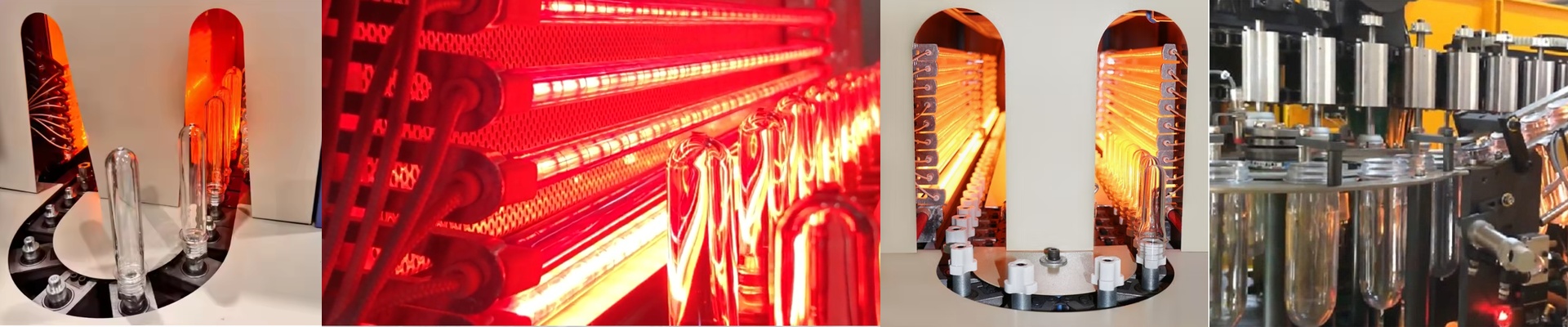
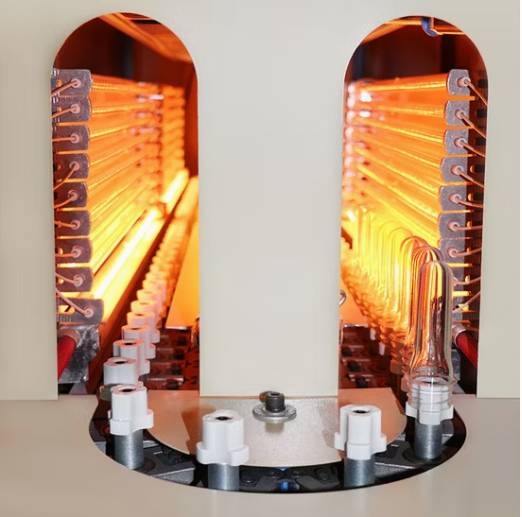
On the blow molding floor, preform heating is the pinch point you feel the moment cycle time starts to wander and weight variance shows up on the pallet. When the heating tunnel is constantly chasing temperature, stretch becomes inconsistent, you get thick spots, and PET goes out the door as scrap. We built the short wave IR lamp, 2500W, 400V, to hit the heating profile your blow molder is after—no guesswork.
What matters, technically
This is short-wave infrared, not a broad-spectrum heater. Short wave dumps energy fast, with high peak intensity that punches through the preform wall quickly and cuts thermal lag across the heating tunnel. Rated at 2500W and 400V, it matches the OEM power and supply you already see on industrial blow molding lines—no step-down transformers, no rewiring headaches. The quartz envelope and halogen filament give you rapid thermal response and stable output, and the standard R7s connector drops right into the sockets on most machines.
Why it works where it matters
In stretch blow molding, repeatable heat is the whole game, not just heat. Short wave IR gets preforms to set temperature in fewer stations, which can tighten the heating segment and steady the overall cycle. The payoff is more consistent wall thickness, fewer rejects, and a heating profile that holds when line speed shifts. Energy use comes down because the emitter heats on demand and cools fast, avoiding the idle losses you get with slower-response options. For replacements, the 2500W, 400V rating is a direct swap on many blow molders, so you keep the same control logic and temperature zones.
The details that bite you
Installation is straightforward, but alignment is not optional. Mount the lamp so the focal point sits dead center on the preform path; even a small offset skews temperature distribution and shows up as weight swing. Expect peak surface temperatures—guard it properly and use heat shielding. This is a high-intensity emitter, treat it like one. Keep reflectors clean and intact. When reflectivity drops, you lose output fast, even if the lamp still lights up. And plan to check the connector and base regularly—machine vibration will loosen contacts and cause intermittent heating in a hurry.