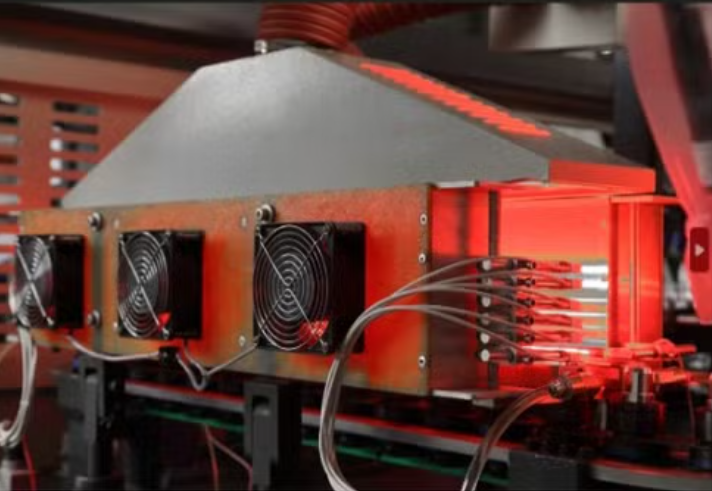
On a blow molding line, preform heating is the throttle. Let the heating tunnel drift, and you’re chasing scrap—uneven wall thickness, blown bottles, a line that fights itself instead of running. We built our IR heating module to take the guesswork out and put repeatable engineering in its place.
What matters, technically
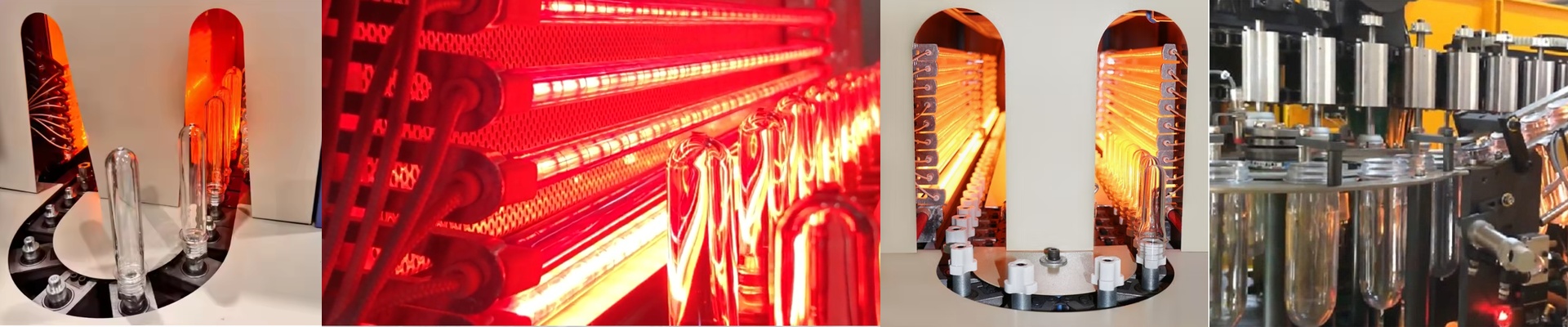
The module runs short-wave halogen quartz emitters tuned for PET, so response is fast and temperature control stays tight across the preform body. Typical ratings are 200–240 V, with power density matched to the blow molder’s tunnel geometry—no over-spec’d zones, no wasted energy. Element length and mounting centers line up with common OEM spacing, and the R7s connector interface keeps swap-outs quick. Peak wavelength stays in the near-infrared band where PET absorbs efficiently, so you heat the preform, not the air around it.
Why it works in the real world
Stretch blow molding moves fast from heating to blowing, and repeatability is the only thing keeping the line stable. This IR module hits setpoint quickly, holds it, and recovers fast between shots—supporting consistent biaxial stretching and cutting thickness variation. The payoff shows up as fewer rejects, steadier output, and lower kWh per thousand bottles. Retrofits are straightforward on most machines, so you can upgrade heating performance without scrapping the blow molder.
The things you’ll want to watch
IR performance hinges on reflector alignment, emitter cleanliness, and the preform’s color and additives—darker preforms absorb more energy and can run hotter. Make sure your control can keep up with the faster thermal response; PID tuning matters. Verify tunnel clearance and airflow, too—these emitters run hot, and proper cooling protects both the lamp and nearby components. Plan maintenance around lamp life, so you replace on schedule, not on failure.