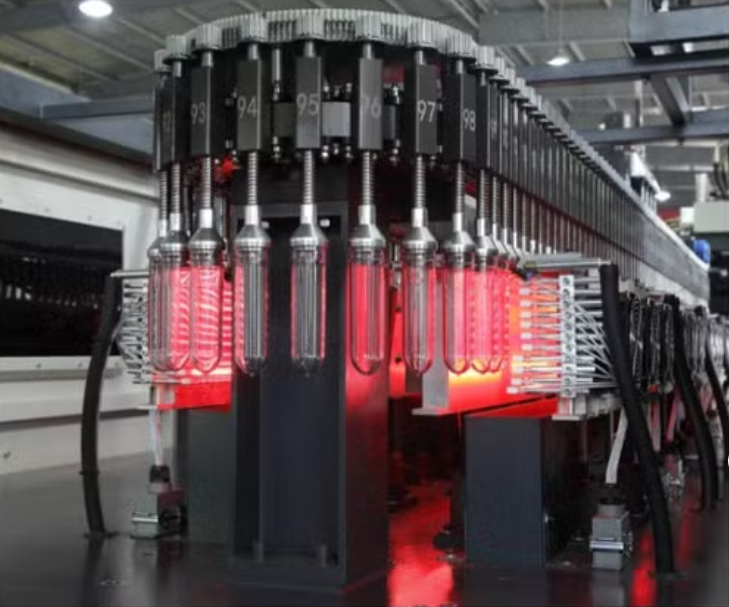
On the blow molding line, PC clarity is more than looks—it’s a spec you have to hit. Haze from uneven preform heating shows up as cloudiness, and that gets you rejected at first inspection. You can fiddle with timing and pressure, but if the heating profile is off, the bottle will still look dull.
What matters under the hood
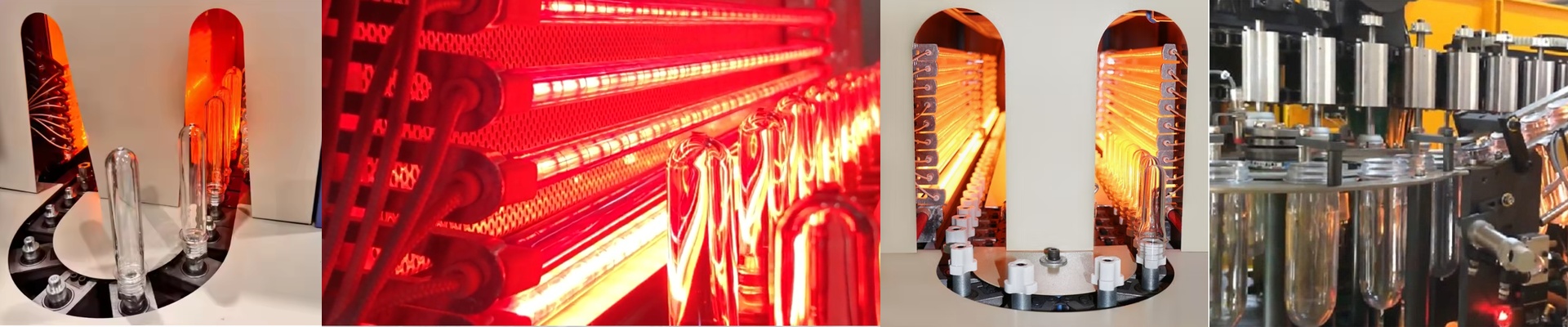
We run short-wave infrared emitters in the preform heating tunnel, tuned to match PC’s absorption curve. That gives you fast, surface-dominant heating without cooking the neck. Quartz envelopes deliver high radiant density and snap response, so the temperature swing from preform to preform stays tight. The geometry is built around the standard R7s connector and the mounting footprints used on Sidel, Krones, SIPA, Husky, SACMI, and Nissei ASB machines. Spec voltage and watt density to match the OEM heating zone design, so the power curve lines up with preform wall thickness and cycle rate.
Why this approach holds up in stretch blow molding
Clarity on PC comes down to uniform stretch and keeping thermal degradation to a minimum. With the right IR spectrum and tight zone control, you get repeatable preform temperature across the heating tunnel. The payoff is a bottle that meets the clarity target and delivers the impact performance you need. You’ll also see fewer rejects from inconsistent heating, and energy use drops because the emitter heats fast and holds steady without overshoot.
The details that make the difference
IR heating is touchy—reflector alignment and preform spacing matter. Set the emitters at the correct gap to the preforms and verify reflector cleanliness; misalignment shows up as hot spots and uneven clarity. Make sure the voltage and cooling match the blow molder’s cabinet and airflow. Some lines run hotter tunnels, and that changes emitter life. Start conservative on the profile, then tune up.